Free shipping to UK Mainland £50+
14-Day Returns Policy
Carbon Neutral Deliveries

Find Your Glow

Take 2 minutes to find your perfect routine

Get Started

Derma Loyalty Club

Earn points with every purchase

Join The Club
Added to bag
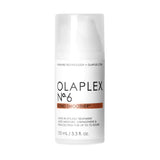
Olaplex No.6 Bond Smoother

Olaplex No.6 Bond Smoother

£28.00
+Derma Points

Leave-in styling cream for all hair types. Repairs disulfide bonds and controls frizz for 72 hours with Olaplex's patented active ingredient, Phytantriol and Panthenol.

  • Clearpay
  • American Express
  • Apple Pay
  • Diners Club
  • Discover
  • Google Pay
  • Klarna
  • Maestro
  • Mastercard
  • PayPal
  • Shop Pay
  • Union Pay
  • USDC
  • Visa
Order by 3PM weekdays for same day dispatch

Olaplex No.6 Bond Smoother is a concentrated, leave-in styling cream formulated to repair, smooth and define hair while controlling frizz for up to 72 hours. Formulated with the same patented active ingredient as the Olaplex professional system, Bis-Aminopropyl Diglycol Dimaleate, it works by finding broken single sulphur hydrogen bonds within the hair and cross-linking them back together to form disulfide bonds — the bonds responsible for hair's strength and structure that are broken down by colouring, heat, UV exposure and mechanical styling such as brushing and combing. Suitable for all hair types and textures, it is colour-safe, vegan and suitable for chemically treated hair, and is free from sulphates, phthalates, phosphates, parabens and MIT/MCI.

Infused with a range of fermented natural oils, No.6 Bond Smoother nourishes hair while delivering anti-ageing benefits, improving absorption, feel and combability and speeding up blow-dry time. Phytantriol and Panthenol work together to prevent breakage, thicken the cuticle and create a natural sheen. It provides heat protection up to 450°F/232°C and, despite containing silicones, will not build up on the hair over time. For best results, use after cleansing with No.4 Bond Maintenance Shampoo and conditioning with No.5 Bond Maintenance Conditioner, applying Bond Smoother to damp hair before styling. Concentrate product on the mid-lengths to ends, comb through and style as desired.

Benefits

  • Repairs damaged hair's disulfide bonds, transforming brittle, dry hair into soft, manageable and shiny hair
  • Controls frizz for up to 72 hours and provides light hydration without weighing hair down
  • Speeds up blow-dry time while reducing frizz and flyaways
  • Thickens the hair cuticle and creates a natural sheen while preventing further breakage

Key Ingredients

  • Bis-Aminopropyl Diglycol Dimaleate — Olaplex's patented active ingredient, which finds broken single sulphur hydrogen bonds in the hair and cross-links them back together to form disulfide bonds, repairing damage caused by colouring, heat and mechanical styling
  • Phytantriol — works synergistically with Panthenol to help prevent damage, thicken the hair and improve lustre and sheen
  • Panthenol — a conditioning agent that works alongside Phytantriol to thicken hair and enhance overall styling results
  • Vitis Vinifera (Grape) Seed Oil — rich in beta-carotene, Vitamins D, C and E, essential fatty acids and polyphenols, providing supreme nourishment and protection to the hair
  • Tocopherol & Tocopheryl Acetate (Vitamin E) — soothes the hair and provides anti-ageing benefits to keep the hair follicle in optimal condition
  • Helianthus Annuus (Sunflower) Seed Oil — blended with coconut-derived emollient and Vitamin E to soften hair and provide anti-static action, helping to smooth the hair cuticle
  • Dimethicone & Phenyl Trimethicone — silicone conditioning agents that smooth and protect the hair surface without building up over time


Apply a small amount of product to damp or dry hair, concentrating on the mid-length to ends.Comb through and style as desired.

100ml

Water, Cetearyl Alcohol, Dimethicone, Isohexadecane, Coco-Caprylate, Neopentyl Glycol Diheptanoate, Behentrimonium Chloride, Isododecane, Phenyl Trimethicone, Propanediol, Bis-Aminopropyl Diglycol Dimaleate, Fragrance (Parfum), Cetrimonium Chloride, Phenoxyethanol, Glyceryl Stearate, Isopropyl Alcohol, Hydroxyethylcellulose, Hydroxypropyl Guar, Sodium Stearoyl Lactylate, Hydroxypropyl Cyclodextrin, Hexyl Cinnamal, Limonene, Citral, Hydrolyzed Vegetable Protein PG-Propyl Silanetriol, Disodium EDTA, Linalool, Citronellol, Iodopropynyl Butylcarbamate, Hydroxycitronellal, Etidronic Acid, Tocopherol, Geraniol, Potassium Sorbate, Helianthus Annuus (Sunflower) Seed Oil, Phytantriol, Sodium Benzoate, Pseudozyma Epicola/Camellia Sinensis Seed Oil Ferment Extract, Filtrate Tocopheryl Acetate, Vitis Vinifera (Grape) Seed Oil, Aloe Barbadensis Leaf Juice, Panthenol, Citric Acid, Gigartina Stellata Extract, Chondrus Crispus (Carrageenan) Extract, Ascorbic Acid, Cocos Nucifera (Coconut) Oil.

Olaplex

Olaplex revolutionised professional haircare with its patented Bis-Aminopropyl Diglycol Dimaleate technology. This breakthrough ingredient repairs the internal hair structure at the molecular level, reducing breakage and improving resilience during and after chemical services.

The brand’s professional and at-home products work in synergy, from the iconic No.1 and No.2 salon treatments to the best-selling No.3 Hair Perfector and complementary shampoos, conditioners and styling products. Together they rebuild bonds, prevent damage and enhance colour longevity.

By transforming how the world approaches hair repair, Olaplex has become a staple in salons and homes worldwide. Its minimalist, high-performance formulas have redefined haircare for healthier, stronger hair.

Your Bag
Ingredient
Vitamin C
What It Is

Vitamin C is an essential nutrient required for the growth and repair of tissues in all parts of the body, including the skin, but we cannot produce it on our own. The powerful antioxidant is found naturally in fruits and vegetables and commonly produced synthetically in skincare products, such as moisturisers, toners, and, most often, serums.

What It Does

How to use in your skincare routine?

Whether your skin is dry, oily, or a combination, vitamin C is beneficial for skin health, helping it look and feel healthier and younger longer.

Before you apply the vitamin C, test a patch of skin with a lower-concentration formula to see how your skin reacts. Some minor tingling is normal, but if you experience anything more intense, stop using the product and talk to your dermatologist.

For best results, apply this vitamin topically 1-2 times a day, morning and night. Be sure to apply a moisturiser with a broad-spectrum SPF after vitamin C application for daytime.

Benefits
  • Vitamin C makes sun damage and surface pigment spots less visible and brightens a dull, blotchy skin.
  • It is a powerful antioxidant that protects the skin from irritation, inflammation and environmental pollution.
  • It reduces red blotches left after spots by improving the skin’s natural healing process.
  • It increases the effectiveness of sunscreen and gives the skin better protection from UV rays 
Vitamin E
What It Is

Vitamin E is a fat-soluble, essential nutrient with anti-inflammatory properties. Vitamin E helps support the immune system, cell function, and skin health. It’s an antioxidant, making it effective at combating the effects of free radicals produced by the metabolism of food and toxins in the environment.

Vitamin E is a powerful antioxidant that may be effective at reducing UV damage in skin. And when applied topically may help nourish and protect your skin from damage caused by free radicals.

What It Does

How to use in your skincare routine?

It can be used underneath moisturiser and sunscreen in the morning [if it’s a vitamin E oil] and is sometimes combined with other antioxidants, such as Vitamin C in Serums.

Best suited for those with dry, very dry, or mature skin.

Avoid using if you have very oily, acne prone skin or those prone to sensitivity.

Benefits

In moisturisers it can:

  • Stop skin from losing moisture.
  • Protect cells from damage.
  • Soften skin.
Vitamin B5
What It Is

Vitamin B5 is also called pantothenic acid and once consumed, its main function is to convert carbohydrates into glucose for energy. Nevertheless, it is also used in supplements and within skincare (applied topically) to promote healthy-looking skin.

Vitamin B5 found to have anti-inflammatory, skin barrier-strengthening, and wound-healing properties.

What It Does

How to use in your skincare routine?

The beauty of the ingredient is that it does not increase photosensitivity, which means it can be used both morning and/or night, and it plays well with other ingredients.

We advise you wash your face and use a toner to remove excess dirt and grime, then following that up with a lotion or cream that contains Vitamin B5. Because it's highly unlikely to cause any type of irritation, using it even multiple times a day shouldn't pose any problems

Benefits

Vitamin B5 has many beneficial properties from a skincare point of view.

Firstly, it stabilises the skin’s barrier which means that your skin retains more water, moisturising it and helping it to maintain its softness and elasticity. As a result, it becomes plumper and may even reduce fine lines as it smoothes the skin’s surface.

Vitamin B5 has also been recognised to help with more chronic conditions such as cystic acne, eczema and rosacea as it enhances the healing process of the skin and reduces blemishes.

This vitamin is generally gentle and safe for everyone with low chances of irritating the skin, and those with oily skin may also like it, as it provides very lightweight moisturisation.

AHAs / BHAs / PHAs
What It Is

The world of acids can be divided into a few categories, three to be precise: Alpha Hydroxy Acids (AHAs), Beta Hydroxy Acids (BHAs) and the underdog, Polyhydroxy Acids (PHAs). If you're using a skincare acid, it'll fall into one of these three categories.

AHAs

These may ring some bells as you're bound to find an AHA already hiding in your skincare routine. AHAs are chemical exfoliators that can be extremely helpful for oily or blemish-prone skin if used on a regular basis.
The top dogs in this category are Glycolic Acid and Lactic Acid. You can find them mixed in with serums, moisturisers, cleansers and toners, depending on how high of a dosage you want to use (the smaller the percentage, the less potent the formula).

BHAs

Whilst they are also chemical exfoliators, AHAs and BHAs treat different skin problems.
AHAs are ideal for those concerned with ageing skin, whereas BHAs are best for those who are one the oilier side of the skincare spectrum and struggle with acne, blackheads and milia (the little white bumps you sometimes see under the skin).
Whilst AHAs are only water soluble, BHAs are oil soluble, which is why they are ideal for those struggling with an oil-slick T-zone. They can get below the oil that’s clogging up your skin and also have antibacterial and anti-inflammatory properties. So they help spots disappear quicker and calm any redness.
The most popular BHA is Salicylic Acid. It can be found in a range of different formulas targeted at spot treatments.

PHAs

The underdog of the acid trilogy, PHAs don't get the praise they deserve.

"PHAs (AKA Polyhydroxy Acids) are very similar to traditional alpha hydroxy acids, because both work by breaking down the 'glue' that binds dull, dead cells to the surface of the skin." Daniel Isaacs, Scientific Director at Medik8

They're especially beneficial for those who find other acids too strong. 'Even very sensitive skin types can harness the resurfacing powers of PHAs,' says Daniel. 'In clinical studies, they have been proven to be compatible with dry, itchy skin conditions such as eczema and atopic rosacea.'
The most common PHA acids are Gluconolactone, Galactose and Lactobionic - bit of a mouthful to say but well worth looking out for the next time you’re in the market for a new chemical exfoliant.

Antioxidants