Free shipping to UK Mainland £50+
14-Day Returns Policy
Carbon Neutral Deliveries

Find Your Glow

Take 2 minutes to find your perfect routine

Get Started

Derma Loyalty Club

Earn points with every purchase

Join The Club
Added to bag
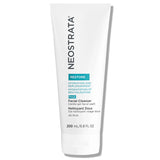
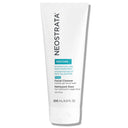
NeoStrata Restore PHA Facial Cleanser

NeoStrata Restore PHA Facial Cleanser

£32.00
+Derma Points

A gentle, non-foaming PHA cleanser that removes impurities while supporting the moisture barrier. Ideal for dry, sensitive and reactive skin types.

  • Clearpay
  • American Express
  • Apple Pay
  • Diners Club
  • Discover
  • Google Pay
  • Klarna
  • Maestro
  • Mastercard
  • PayPal
  • Shop Pay
  • Union Pay
  • USDC
  • Visa
Order by 3PM weekdays for same day dispatch
Dry Skin
Sensitive Skin
Eczema

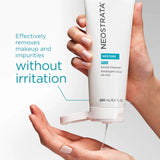
Refresh and cleanse the skin while supporting its natural moisture barrier with the NeoStrata Restore PHA Facial Cleanser. This gentle, soap-free and non-foaming gel cleanser effectively removes makeup, impurities and surface buildup without leaving the skin feeling tight or dry. Formulated with Polyhydroxy Acid (PHA), it provides mild exfoliation to promote smoother, brighter-looking skin while remaining highly tolerable — even for sensitive, reactive or post-procedure skin.

Clinically tested within the Restore Regimen, this comforting cleanser helps improve the look of uneven tone and enhances overall radiance when paired with:

Benefits

  • Gently cleanses without stripping or disrupting the skin barrier
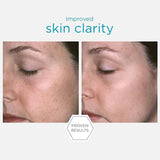
  • Supports smoother, brighter and more refreshed-looking skin
  • Non-foaming, soap-free formula ideal for sensitive and reactive skin
  • Provides mild exfoliation through Polyhydroxy Acid (PHA)
  • Helps prepare the skin for the rest of your routine

Key Ingredients

  • 4% Gluconolactone (PHA): A gentle exfoliating acid naturally found in the skin. Helps smooth texture, support the moisture barrier and provide antioxidant protection. Known for excellent tolerability, including for sensitive and post-procedure skin.

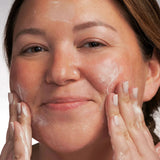
Apply a moderate amount to wet skin and gently massage in a circular motion.Rinse with water.Use twice daily.

200ml

Aqua (Water), 4% Gluconolactone, Triethanolamine, Polyquaternium-10, Propylene Glycol, PEG-80 Sorbitan Laurate, Cocamidopropyl Betaine, Sodium Laureth Sulfate, Glycine, Disodium Cocoamphodiacetate, Panthenol, Sodium Chloride, Propylparaben, Methylparaben, Phenoxyethanol

NeoStrata

NeoStrata was founded by the dermatologists who first discovered and patented alpha hydroxy acids (AHAs), making it a trailblazer in skin resurfacing and rejuvenation. Its science-led formulas improve cell turnover, refine texture and visibly reduce fine lines and hyperpigmentation, while supporting skin barrier health.


The brand offers a full portfolio of cleansers, serums, moisturisers and targeted treatments designed to suit different skin types and concerns. Key ingredients include AHAs, PHAs, bionic acids, retinol and antioxidants, all carefully balanced for efficacy and tolerability.


Clinically proven and recommended by professionals worldwide, NeoStrata delivers results-driven skincare for smoother, healthier and more radiant skin. Its innovation continues to shape the professional skincare market today.

Your Bag
Ingredient
AHAs / BHAs / PHAs
What It Is

The world of acids can be divided into a few categories, three to be precise: Alpha Hydroxy Acids (AHAs), Beta Hydroxy Acids (BHAs) and the underdog, Polyhydroxy Acids (PHAs). If you're using a skincare acid, it'll fall into one of these three categories.

AHAs

These may ring some bells as you're bound to find an AHA already hiding in your skincare routine. AHAs are chemical exfoliators that can be extremely helpful for oily or blemish-prone skin if used on a regular basis.
The top dogs in this category are Glycolic Acid and Lactic Acid. You can find them mixed in with serums, moisturisers, cleansers and toners, depending on how high of a dosage you want to use (the smaller the percentage, the less potent the formula).

BHAs

Whilst they are also chemical exfoliators, AHAs and BHAs treat different skin problems.
AHAs are ideal for those concerned with ageing skin, whereas BHAs are best for those who are one the oilier side of the skincare spectrum and struggle with acne, blackheads and milia (the little white bumps you sometimes see under the skin).
Whilst AHAs are only water soluble, BHAs are oil soluble, which is why they are ideal for those struggling with an oil-slick T-zone. They can get below the oil that’s clogging up your skin and also have antibacterial and anti-inflammatory properties. So they help spots disappear quicker and calm any redness.
The most popular BHA is Salicylic Acid. It can be found in a range of different formulas targeted at spot treatments.

PHAs

The underdog of the acid trilogy, PHAs don't get the praise they deserve.

"PHAs (AKA Polyhydroxy Acids) are very similar to traditional alpha hydroxy acids, because both work by breaking down the 'glue' that binds dull, dead cells to the surface of the skin." Daniel Isaacs, Scientific Director at Medik8

They're especially beneficial for those who find other acids too strong. 'Even very sensitive skin types can harness the resurfacing powers of PHAs,' says Daniel. 'In clinical studies, they have been proven to be compatible with dry, itchy skin conditions such as eczema and atopic rosacea.'
The most common PHA acids are Gluconolactone, Galactose and Lactobionic - bit of a mouthful to say but well worth looking out for the next time you’re in the market for a new chemical exfoliant.


Gluconolactone
What It Is

Lactobionic Acid Is The New Ingredient Transforming Winter Skin. From mandelic to salicylic, exfoliating acids are huge in skincare right now. Promising brighter, smoother and clearer skin, they work on both a surface and deeper level to lift away dull, dead skin cells, unclog pores and minimise hyperpigmentation.

What It Does

You should avoid using lactobionic-acid alongside products containing glycolic acid or other chemical exfoliants. However, it’s usually ok to use multiple chemical exfoliants if they’re in one multi-ingredient product as these are usually tested for irritation potential.

Chemical exfoliants should only be used a maximum of 1-3x per week to avoid over-exfoliation, skin barrier damage, and inflammation.

When using any type of chemical exfoliant, it’s important to apply it to dry skin to reduce the risk of irritation. For example:

  • Cleanse
  • Thoroughly dry skin
  • Apply Lactobionic acid toner or serum
  • Follow with moisturizer
  • Apply sunscreen (AM only)

To reduce irritation, you can also use lactobionic-acid after your moisturiser which will act as a buffer to slow the rate that the acid penetrates your skin.

Benefits

Exfoliation: As a PHA with large molecules, it acts as a mild exfoliant. It boosts the removal of the outer layer of the skin, helping to get rid of dead skin, leaving you with smooth skin.

Sun Protection: It has antioxidant properties and offers your skin some protection from the sun’s ultraviolet (UV) rays.

Skin Thickening: It can improve the thickness of your skin which helps to increase firmness.

Anti-Aging: It boosts the production of collagen, which helps to reduce the appearance of fine lines and wrinkles and improves elasticity.

Skin Brightening: It helps to fade dark spots and marks, including under-eye darkness, and can help with hyperpigmentation by increasing cellular turnover.

Hydrating: Lactobionic acid is a humectant  which means that it can draw moisture from the deeper layers of your skin (and from the atmosphere in humid environments) into the outer layers of your skin to keep it supple and hydrated, without making your skin feel greasy.

Treating inflammatory skin conditions: It reduces skin pH without irritation which helps inflammatory skin conditions like acne and rosacea.